Do You See Me?

***

This short story was originally published online with Potluck Magazine in July 2015. The link can be found below:

http://potluckmag.com/july-2015/2015/7/19/do-you-see-me

It was also my very first publication in a literary journal.  Start the dance music.

***

My two day unwashed hair is greasy, face dotted in red and white pimples as I stand at the counter with yellow-egg splotches dribbled down my white t-shirt, combined with brown dusty crumbs from the last customer’s toast. I push my black, grease-stained skirt, apron-wearing-hip against the counter. The pocket of my apron holds runaway home fries, escapees from a plate earlier this morning. On my uniform I have all the essential elements of a great Canadian breakfast. If I get hungry later, I can snack on my clothes. I grab the coffee pot that contains the steaming black tar, lean in to ask a customer in my soft spoken, customer-oriented voice, “More coffee?”

I come from a large family consisting of me and my five siblings: Debra, Rob, Joseph, Cynthia, and Brad.  I am one of the middle children. Last Saturday night, I spent the evening scrubbing my mother’s bathtub, sinks, and toilets. My mother has been recently diagnosed with colon cancer and is in treatment. Cancer and chemo stole my mother’s energy. Cleaning is now an impossible task for her. Our father is gone; the victim of a Christmas heart attack last year.

My sister, Cynthia, called as I was leaving the house to ask a favour.  Cynthia is divorced and has crossed the eight-month line. She has started to shop for a new husband. Her husband, after six years of marriage, decided one night he didn’t want to be married anymore and left. It was that simple for him.

Cynthia is convinced that this new guy is “the one” and begged me through desperate tears to babysit her daughter, Kendra. As I hesitated in providing her with an affirmative answer she began rambling about the unfairness of life: a husband who abandoned her and their child, changing his mind without warning after an agreement was made in marriage and words. Cynthia proceeded to paint a picture of her date, Henry, like this: countless child-friendly dinners out with Kendra, trips to museums as a family, and she spoke at length about a planned trip to New York which Henry will finance. But, on that particular Saturday night, it was just to be the two of them at the Keg Steakhouse. Unfortunately, the babysitter that Cynthia booked for the evening developed a spontaneous case of the stomach flu, a common occurrence for THAT babysitter.

Cynthia’s daughter, Kendra, is a five-year-old, adorable little girl. According to Cynthia, all of my other siblings were busy. Rob was swamped at work managing competing projects for his company; Joseph had a date with his model-girlfriend. The hand model demands Joseph be on time, must not cancel scheduled dates under any circumstances, and Joseph pays for all their outings even though they are not in a committed relationship. The youngest in our family, Brad, broke his leg two weeks ago riding his motorcycle on slippery streets which were covered in rain that later froze when the temperature plummeted in the evening. Brad said he wanted just one more ride before the season ended. He can barely walk to the fridge. But, he’s lucky to be alive. That reminds me – I need to make Brad some food. McDonald’s wrappers littered his apartment intermingled with the odd empty potato chip bag when I saw him on Tuesday. His friends think they are helping. He will be three hundred pounds before that cast comes off.

Debra never picked up the phone when Cynthia called. She never does. To be fair, she works full time as an administrative assistant at a hospital and has two children. Debra is constantly shuttling her children to various extra-curricular activities: piano lessons, guitar lessons, volleyball, basketball or swimming – the list is endless.   After shuttling, Debra can be found up to her elbows in soap suds scrubbing the pots and pans from dinner. Kevin, her husband, works full time too, but prepares healthy dinners for his team. That’s what he calls them – a team. After the children are in bed, Kevin will help Deb clean the kitchen.

I secretly think Kevin uses the time in the kitchen as an excuse to be with Debra. I’ve witnessed on numerous occasions, Kevin whistling while wiping counters down or drying dishes. (No man is ever that happy to do housework.) But, he will also make soap boobies or a penis in the dish water when Debra isn’t looking. When he has built a sudsy penis, inevitably, Debra will stick her hands in the water breaking the penis in two. On cue, Kevin winces and screams, cradling his private parts in horror. A small smile crosses my face. What a clown – and a good guy.

That left me to babysit. Babysitting and cleaning toilets on a Saturday. I love Kendra, but sometimes I just want to stop. Stop it all. No more working, cleaning, cooking, or babysitting. But, I know what will happen at work if I stopped. Grumpy, old, grey-haired, wrinkled, cane-wielding-Gertrude will have me fired.  She will stroll into this diner, demand her coffee, and when I don’t respond, will tap her cane three times on this black, slippery floor (she says she does it to get my attention) and scowl demanding to speak to Rudy, the manager. Words like incompetent and inefficient will roll off of Gertrude’s tongue. I’ve heard it before.

I’m sure Gertrude doesn’t really need the cane. I suspect she carries it as a weapon to beat unsuspecting victims, (no one would be suspicious of an old, defenceless woman) or to trip innocent people as they walk down the streets for malicious fun.

Does anyone see me?

I am a thirty-six year old, University-educated woman. I only completed University through student loans and hard work. I am not smart. I’ve been told. While the other wealthier, brilliant, students clubbed on weekday and weekend nights, I sat in my room studying text books convinced it would get me somewhere. And here it is. I am like the 1980’s, red rose wallpaper on these walls.

I am just part of the old decor.

I’m circling the black, grunge-ridden floor of this diner with red sticky booth seats. I watch as Allison wipes the syrup from her blonde, blue-eyed, toddler daughter’s face.  I check my other customers; Brian and Dan are in expensive grey business suits today and both wear their lucky Italian ties. They discuss another sub division planned in the area. Family and careers are juxtaposed in this world. I have neither.

Am I just a waitress, cleaner, cook, babysitter? I’ve covered all the domestic roles except the one I really wanted:  to be a mother.  After multiple miscarriages and a visit to a fertility specialist she said your odds of successfully conceiving a child and carrying it to term are less than 20 percent.  

I’m losing on all the front lines.  

In terms of career, how did I end up here? Failure again, is the correct word. In my past, I have held several administrative positions at companies with each company folding faster than the one before. There are signs when a company is in a downward spiral: employees diminish through lay-offs or resignation, vacant offices increase, funds for necessities such as office supplies decrease, and there are many, many, closed door meetings. I bounced out of each company quickly, locating a new opportunity shortly before my pink slip arrived. The last time, I was not so lucky.

Unemployed. It sounds like a dirty word: worthless, undesirable, down-sized. I was off for a few months and then everyone, with the exception of my husband, told me I should just take anything. Family and friends said: certainly you can wait tables as you did in University. Some money coming in is better than no money. My husband was the exception, encouraging me not to settle too quickly. But, after a few months enduring relentless, you could always work at McDonald’s jokes (why does everyone think that joke is so damn funny?) I took a waitressing job. Here I circle, one year later.

This is the middle of my life where I should have most of my shit together. And yet, I have nothing; no career, no children, and no house. I am biologically deficient in every way – not smart, and unable to reproduce. If natural selection is always at play, it has determined my genes to be inferior. How can I argue?      

I circle. If this were the end of my life, I would hope at my eulogy, I would be described as a good and kind daughter, wife, sister and friend. Oh God – please don’t say, what made her really happy was cleaning, cooking and serving. I swear, I will come back and haunt that person. All joking aside, my real concern is this: does anyone know who I am?

I blink back tears as I place the coffee pot back on the burner. I want a different life, but how do I make it happen? There are bills to pay, family and friends that depend on me. I want to change my life, but how? How much of my life do I give to others, and how much am I entitled to? What is the ratio?  90/10? 50/50? 30/70?

I know part of how much I give depends on how much I offer. But, I wonder – if I took care of me first, was happier, healthier and less resentful, wouldn’t I be able to help others more?

Or is that just the selfish?  What happens if I took the $15,000 in my RRSP’s and travelled for a few months to relax and think about what I want to do with my life? I hang my head down and put my hands on my face in an effort to hide the tears that swell in my eyes. Physically, emotionally, and financially bankrupt; I am spent. 

I have other plans. Here’s an example. What if I used the $15,000 in RRSP’s to buy property on the outskirts of the city in the hopes in ten or twenty years a developer will purchase it for a subdivision?  As already proven, the area is in a boom phase for residential building. It would be a long shot. I know. But I might be financially secure in my later years.

I hate this job.  I should quit right now. Walk out those doors today and find a Monday to Friday job that pays more than the $19,000 I made last year, tips included.

If I quit, do I include the waitress position on my resume if I want another administrative role? Is it true that it’s better to do something versus nothing? Or, if I left it on my resume, does it demonstrate to potential employers that I lack ambition?

Who am I kidding though? I wouldn’t quit on Rudy. Rudy, the owner, defended me against cantankerous Gertrude when she declared me incompetent, shuffled my shifts around to accommodate my mother’s sudden and various medical appointments, and I am always called in first if another waitress calls in sick. He’s a wonderful boss. I know I’m lucky in some ways.

As I uncover my face, I see her white hair. GERTRUDE. How long has she been sitting there? 

“Hello dearie,” she says as her head is tilted and she taps her cane three times on the floor. “Where’s my coffee?”

I grab a cup and saucer and pour the morning brew.

“Is there something wrong?” She asks in her squeaky, kind, grandmother voice.

It’s just a trick, I tell myself. Don’t fall for it. She doesn’t care. “Absolutely nothing,” I say with my head raised and a reassuring smile.

“Good. I was concerned I would lose the worst waitress that I’ve ever met.”

I stare at her dumbfounded, purse my lips together as my jaw locks up. God, I hate her.

Gertrude smiles at me, her eyebrows are raised as she tastes the black, caffeinated, poison.

Now that her brain is on, there will be no end to her comments. Trust me, I know what I am. She doesn’t need to point it out.

Gertrude places her coffee cup down on the saucer and stares at me for a long moment. The smile evaporates from her face as she drops a card on the counter and pushes it across to me.

“I give you a hard time Tammy, because I know you can do more than this. Maybe you’re tired or lazy, or possibly both, beaten down by life’s complications. But, don’t waste your life away. My daughter, Pamela Radder, works for an employment agency. You should call her. I’m sure she can find you another job better suited to your education and skills.”

My mouth gapes open as I stare at her in disbelief.    I hesitate for a moment wondering if she is playing some awful joke on me.

Gertrude’s eyes are steady, lips have narrowed, shoulders and jaw have tightened. She looks serious.

Softly she says, “Listen, I’ve lived a long life – and mostly a good one. I was married to a wonderful man for forty years.” Gertrude take’s a deep breath as if she’s about to go under water. I watch her grey eyes get misty like a foggy day. Then, she exhales and the fog dissipates.

She continues, “We have two beautiful, successful children who take care of me now. I am also blessed with three grandchildren. But, just like you, I went to University then settled into low-paying jobs after graduation. My husband, Daniel, was in a car accident shortly after we were married and we had two small children to feed at the time. I worked anywhere to pay the bills.”

Gertrude chokes on more tears that have gathered again at this memory. Her voice is thick. She is drowning. The tears fill her lungs making it difficult for her to breathe, let alone talk. I know. The same thing happens to me when I talk about Dad.

With more determination she clears her throat with greater force, sits erect, pushing the painful memory back.  She continues, “Daniel eventually recovered and became a successful businessman. After he was better, I gave up on any chance of having a career, too tired by footsteps I had already taken. My husband was a modern man for our time and he encouraged me to pursue the things I talked about when we first met.”

“He sounds like a wonderful man,” I say, not knowing what else to say.

For a moment I think about my husband. He was the only one who told me not to go back to waitressing. He said I could do more.

“Yes,” she says. “He knew me better than I knew myself. I was a fool who flatly refused to think outside the box, as the saying goes nowadays. I regret not listening to him. Life is short and time is finite. You will eventually run out of time.”  I am experiencing too many feelings in this conversation: confusion, anger, sympathy and sadness. Just like Mount Vesuvius, there is red hot lava boiling up in my head. An eruption is inevitable. I suddenly snap at her, “You said I was incompetent!”

“You’re alright as a waitress. But I know you’re unhappy. I wanted to give you some incentive to find a better job!”

Gertrude pauses and looks down at the counter for a moment. Then, she raises her head, as her eyes meet mine, she sighs, and says, “I was trying to get you fired. If you lost this job you would be forced to find something better. I’m sorry, I was wrong. I should have just told you that you could do better. You’re a smart girl Tammy. You deserve more.”

She pauses, eyes locked on me. “I heard about your father, your mother’s illness, and your brother’s accident. It’s a small town and everyone talks. But no matter how hard it is, you should always push forward even when the deck is stacked against you.”

With a sudden, widening, lop-sided smile, she adds, “You don’t want to turn out like me, do you?

A snort of laughter erupts from me. Then, my face flushes hot with embarrassment. My laughter is an admission of guilt; all those unkind thoughts that I had towards Gertrude. Oh god, I’m an ass.

I place my hand on top of hers and quietly say, “No, I wouldn’t want that.”

I bite my lower lip and pause for a moment to consider her words. I hesitate as the card stares back at me, beckoning me to take a chance. I consider my other options. They are zero. I pick the card up and slide it into my apron.

I turn around and reach for the coffee pot on the burner. I ask Gertrude, more gently than ever before, “More coffee?”

“Yes, please.” Gertrude says with her chin raised, sparkle in her eye, as she beams at me with a look of satisfaction.
The Fog In My Mind

The short story, Alvina’s Quest for Knowledge, sits incomplete on my hard drive. I know how it will end.  What I’m struggling with are the parts in between: the building blocks that will add momentum and suspense keeping readers engaged so that they can complete reading the story.

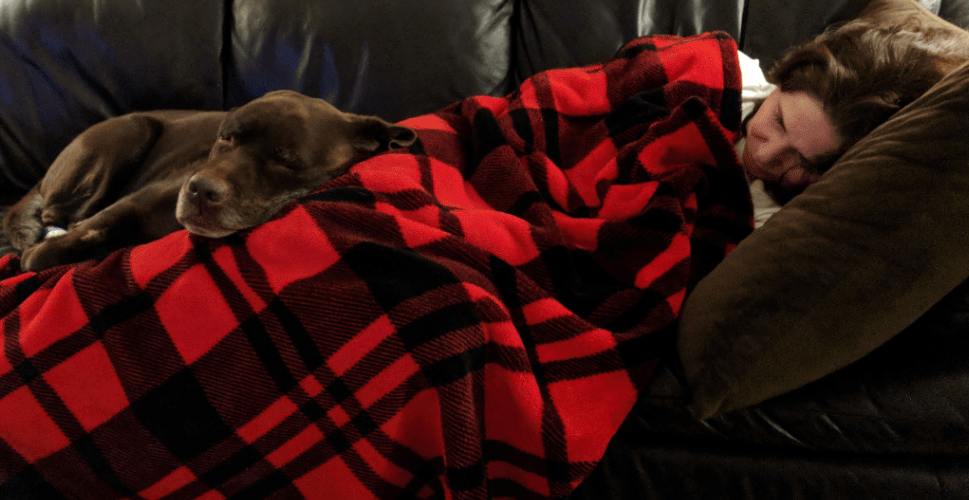
I’ve spent the last week in a lethargic state. I feel every foot strike of my boots hitting the pavement, while at the same time my feet also work as anchors slowing me down. Each roll of my heel causes my calves to burn, thighs tingle, quads wish for the whole process to end. If there’s a jerk from the end of my dog’s leash, my shoulders ache causing a pulling sensation to ricochet through my arms. The tug of the leash doesn’t need to be very strong. By the conclusion of my slow walk with my best dog in the world, I’m yearning for a nap.

The smallest of tasks are impediments. I thought twice about attempting poached eggs this morning because boiling water seemed strenuous.  It’s as if I’ve run a marathon by 9 AM depleting my energy leaving me physically exhausted. As anyone who has a run a marathon knows, by the end of 42 KM your exhaustion levels are high causing the simplest of mental calculations to be nearly impossible. What’s two plus two? Not a clue. Ask me again in a couple of hours, and perhaps, I can answer the question.

T’s are no longer crossed. I’s are no longer dotted. Words evaporate as I attempt to form sentences in conversation. While sitting at my desk in front of my monitor, my fingers slip here and there causing me to incorrectly spell the most mundane words. Worst of all, I lack the mental stamina to put words together to create worlds, people, and events that would form a story.

I’ve made several attempts to complete Alvina’s Quest for Knowledge and barely mustered one page.  The irony is not lost upon me that in attempting to write a story about a little girl who only wishes to be smart, I’ve lost my vocabulary skills and find myself unable to complete the tale. Through fog, blurry eyes, and dizziness I struggle to conclude Alvina’s quest.

At times it seems I’ve become Alvina. In truth, I may have always been her. When I was a child and attempted to learn something new and had difficulties, I remember getting visibly upset. My father, who never completed high school, would be able to help me with my homework because he had a natural aptitude for learning and in particular mathematics. This week I’ve become my twelve-year-old self again at multiple times, teary-eyed, and frustrated at not being able to complete one short story. I want nothing more than to finish putting together my Lego blocks and complete the tale of Alvina and Gurdun.  My overwhelming concern is this: after years of neglecting sleep, eating poorly, and pushing exercise to the sidelines – will I be able to complete that story? Or more concerning, do I have any more stories to tell?

It sounds like I’m being dramatic, I know. But I’ve never struggled as much as I have in the last week to write anything. Even this blog post took several attempts, starts, and stops. After a couple of days at home, and seeing little improvement in my health, I began to wonder maybe this isn’t a virus? Is this what burnout feels like?

There was another event that I should mention. I meant to write a separate blog post on it, but it didn’t happen. In November 2017 I was taken by ambulance to hospital after I had difficulty standing at a full upright position after cleaning the floors. There was pain in the center of my chest below my breasts causing me to bend forward.  It did subside by the time the ambulance arrived, and the paramedics gave me the option whether I wished to go by ambulance, or by car. I decided I would take the ambulance because the pain had lasted nearly twenty minutes.

When I got to the hospital I was checked in, and my husband arrived shortly after. We waited long enough after check-in that I told my husband I felt ridiculous. It was probably indigestion, I told myself. Heartburn plagued me for nearly eight years, and I failed to take my heartburn medication most days. (I’m resistant to taking medications because most of the time I experience side effects.)

But I went to the hospital because I was worried it was my gallbladder, appendix, or some other organ that is completely useless and serves no other purpose except for it to rupture at the most inopportune moment. As we waited, I mumbled to my husband, “I feel ridiculous. I should have just waited it out. It’s probably just heartburn.”

The nurse eventually took me into a room and ran an ECG. I wondered, why? She explained that whenever someone goes to the hospital complaining of pain between their neck and abdomen, an ECG was always run. She reassured me it was routine. I nodded at her as if I understood. But I didn’t.  Then she took some blood. Before I headed back to the waiting area a plastic attachment dangled from my arm and the nurse said, “just in case they need to do more bloodwork.”

I remembered I furrowed my eyebrows and thought, that’s weird. That’s never happened before. I shrugged it off as some new procedure the hospital had implemented recently. The nurse also mentioned someone might come and get me in a few minutes, but in the meantime, I should wait in the waiting room.

Me and my husband didn’t even have a chance to sit down before another nurse summoned us to what I now realize was the emergency treatment area. I was ushered into a room, my husband and I separated, and I plopped myself on a bed as two nurses descended on me with one of them kindly, but very quickly, asking me to put a plastic gown on while another nurse mentioned they ran an ECG and it looked I may have had a “cardiac event.” Once I had the gown on, another nurse began attaching ECG electrodes to me so I could be monitored, while the other woman continued providing information as to what the next steps would be.

I stared down at my exposed foot. It promptly started to involuntarily shake. My mind grasped to make sense of my situation flooding my brain with defensive questions hoping this was a mistake: I’m 43? I have low blood pressure? Normal cholesterol? No family history? I exercise? How can this be happening?

Then honesty took hold of me. Possible answers at how I may be suffering a cardiac event at 43 included: years cheating sleep; poor diet concentrated heavily with sugar; and other than my walks with Hershey, little other exercise. My life had taken on an unstoppable pace of commuting two hours a day to my job; working full-time; coming home and doing chores; walking Hershey; squeezing in writing in the morning before work, evenings, and weekends; and maybe watch an hour of television.  There was little to no time to relax.

Finally I realized I could be a genetic anomaly. I’ve heard of situations where healthy people dropped on race courses due to unknown heart problems. A possible valve issue that remained dormant for years, until under the right circumstances, it had risen to the surface like a whale breaching for air. There was no explanation for it. It was a completely random event.

I stayed that night in the hospital until 4:30 AM. The nurse had spent some time calming me down, reassuring me that I, “didn’t look like I had a heart attack”. When a doctor came in later she said my ECG was a little wonky, but they would run another at 1 AM and if it was normal, I would be released. My husband stared at me pale-faced. I sent him home to rest, frustrated with myself in putting him through my “cardiac event” experience.

Eagerly, I waited till 1 AM and continued to quiet my fears by explaining to myself that the EGC was probably abnormal because of the pain I felt in my chest (heartburn, I told myself) that had caused the abnormal ECG. At 1 AM, I was not released. At 4:30 AM after more than eight hours of observation, the doctor released me with no sign that I had experienced a heart attack.

In the last few months, I’ve gone through multiple tests. For a short time, I was reassured in thinking maybe it was an ulcer. In February I went for an endoscope, and the test results showed no ulcer. However, my EKG showed that there was a little fluid, and that my left ventricle had been remodelled.

What does that mean?  The fluid may have been an infection around the lining of my heart. It happens, and may explain the pain I felt in November, and with rest it will typically clear up on its own. The left ventricle remodelled? NOT A CLUE, what that means. Hopefully, when I see my cardiologist in May he’ll have some answers as to whether that’s a reason for concern, or not.

I’ve been running at a thoroughbred’s pace trying to cross some imaginary finish line that would allow me some time off to rest and recover.  Most days it feels like I’m within a whisker of crossing the self-imposed line, and then someone moves it back another ten meters.

This was part of the reason for my tears and hysterics last week in front of my computer.  I couldn’t write.  I couldn’t think. Just like little Alvina I want to know stuff, I want to learn, I want to be challenged. Not being able to communicate at all due to fatigue, makes the thing I love to do the most (write), impossibly difficult as well as tending to all my other responsibilities. If it’s burnout, I know I’ve done it to myself.

I went to see my doctor last week. She was fairly convinced that the rapid descent of my symptoms meant my body was battling a virus. A few weeks of rest, eating well, and taking care of myself, will most likely result in a speedy recovery.

I’m still frustrated I can’t complete that story. Patience is not one of my strongest traits, and in truth, I hoped my visit to my family physician would mean a prescription for antibiotics and I could return to my thoroughbred pace. Walking Hershey a couple of nights ago, I had an epiphany: I’ve written through grief, loss, financial, and family problems. Why not write about what it’s like to push through debilitating fatigue? Because this is the blog of stories, and whether the struggle is internal or external, I know there’s a story in there – somewhere.

The End

Endings are hard. It’s difficult to live through a change in life whether it’s the conclusion of a relationship, the loss of a loved one, or the termination of a job.  Writing the ending in a story is also challenging as it’s the part a reader will always remember. It will define the story. Or it won’t.

And while we’re on the subject of endings, let me reassure you we’ll get back to the short story “Alvina’s Quest for Knowledge.” But I’m interrupting that story to write about endings because the grand finale matters in every story.  Also right now, I’m inspired to write about this topic. So I’m running with it.

If you read my stories, you’ll quickly learn that I lean heavily towards couples with arms clasped around each other riding a sweet high of nothing-can-touch-us-now-because-life-is-so-damn- wonderful! Or you’ll find that in the final pages of a story, my main character will make a difficult decision that will at least “appear” they are moving in a more positive direction.  To summarize – the final curtain will drop when everything is happily resolved.

I’m a sucker for epic conclusions. When I am writing the final pages, you will find me sobbing uncontrollably over my computer hoping  I am communicating a  fantastic death of one of main characters to readers. (Which may not sound like a great ending, but somehow it will be.) Placing a more positive spin at the conclusion of a tale, my foot will bounce uncontrollably under my desk as my fingers tap at the keyboard as I attempt to summon the right words to convey the emotions my hero/heroine feels before they make a difficult decision that empowers them.

I’m not particularly a fan of endings where the villain wins, or the protagonist loses, or the main character doesn’t learn from their experience. (A bad ending.) After all the time invested in reading a novel, I can’t help but feel a little betrayed when the main character loses or doesn’t use an experience to change their life.

Part of my belief in happily ever after endings in stories (besides the fact that as with all children, I read fairy tales when I was a kid) is my opinion that all lives of good people will end well. I’ve known people who worked hard their whole lives and were generous to everyone, and expected them to win the lottery if not sooner, than close to the end of their lives. (Yes, I believe really good people should win the lottery.) All those clichés about good things happen to good people, and karma convinced me that good people will live at least their last few days in comfort before the grim reaper comes to take them. I felt they deserved that, dare I say, were entitled to it. Life taught me differently.

It’s hard when an ending doesn’t quite happen the way you expected. I wrote a short story in this blog titled, “What I Meant to Say” (https://tortuoustales.com/2017/12/10/) and imagine my surprise when I returned home from work, and my husband announced to me that he read my blog post, and said he thought the story was depressing. I remember casually asking, “Why?”

“Because,” he said, “I thought there would be something big like a car accident at the end or something, and they’d realize how wrong they were, and there wasn’t.”

“Funny,” I remember saying to him, “because originally that was going to be the ending”.

But in that story, there was no big conclusion. No final heightened climax. The ending of that story was left unfinished. It was a fizzle that lingered and continues to linger. Or if you prefer, it’s like hanging onto a rope swinging back and forth, and you want to let go, but can’t. Recently, I’ve realized these stories are a more accurate reflection of life. More times than I care to say, endings don’t end with a final hurrah! or with a big band playing. They end quietly.

But maybe my definition of “happy endings” needs to be redefined.  Some of those people whose lives didn’t end the way I wanted them to, still had good endings. When I lost a family member who was generous to his detriment, the funeral home overflowed with friends and family. Unlike in The Great Gatsby, people cared and they came with swollen red eyes, carrying tissues, to say their final farewells to a great man.

Maybe not every story needs to end with a finale of two lovers embracing with the caption Happily Ever After written below them. A better conclusion, perhaps a more realistic ending, would be two people holding hands dressed in their best after getting married with a question mark below them.

After all, life, just like a story, never promises anyone a happy ending.

Part 1: Alvina’s Quest for Knowledge

“I can’t believe I got a B!” Alvina says squeezing the pages of her test a little tighter in her hand crumpling it. The B stares at her, taunting her, with its curved letter. It’s an insulting reminder she’s not quite smart enough.

Her right foot swings out as she kicks at the ground. Surprisingly, her boot whips up a pile of dirt and it is tossed further down the trail. Alvina’s feet stomp at the ground. But because its spring, she sinks into the moist soil. If it were summer, the path would be dry and her feet pounding on the trail would be louder and would be a clear expression of her anger. Instead what she hears is muffled. The sound of slurping muck under her boots seems to suggest the springtime goo can pull her down below the surface like quicksand – never to be seen again!

Alvina’s face scrunches like twisted metal at the demolition yard when she thinks about the B versus an A; wanting to stomp loudly and only hearing the softness of earth beneath her feet; at wanting to be smart, and maybe, only being average. With this thought, anger blisters throughout her body.  It pops and explodes pulsing with fire through her veins.  Alvina kicks at the ground again, and another huge chunk of mud lifts up and spreads out across the air before it crashes into trees, ferns, and other plants that are in the way.

“What’s the matter?” Alvina hears from behind her.  It’s a curious tone mixed with concern.

Alvina glances over her shoulder. Standing on the path is a woman with long black hair, wearing a multi-coloured wool hat on top of her head, a plaid shirt, and blue jeans.  The woman’s face is punchy white against her black hair and it reminds Alvina of how white the moon looks on a clear night against the background of a black sky.

“Nothing,” Alvina mutters to the tall woman who is still standing further down the path.

“Nothing?” The woman says. “Surely, it must be something. You wouldn’t redecorate the woods for no reason.”

Alvina quietly laughs at the woman’s joke. Then Alvina huffs, glances up at the woman, before her eyes skim the woods. She doesn’t really want to answer the question. Alvina glances at green ferns, maple trees, balsam firs, and the dangerous wild parsnip that Mom warned her about when she said, Alvina, don’t get too close to the wild parsnip. That stuff will burn you.

“I got a B on a test,” Alvina blurts out to the stranger.

“You should be proud: a B is a good mark!” The woman says the words in an authoritative tone and with a nod of her head. To Alvina, it seems like the women has placed too much energy in the statement as if she’s trying to convince her it’s true.

Alvina’s eyes glare at the woman dressed as a lumberjack. She says, “I wanted an A.”

The woman folds her arms in front of her chest, tilts her head, and asks, “Why?”

“Because,” Alvina hesitates as if she were a train climbing up a monster of a hill with a heavy load. With her next words, it’s as if the train has reached the top, and now with the downhill momentum it blasts straight down and  Alvina’s words rush out of  her with the same speed when she finishes her because statement with, “I want to be smart.”

“You think a grade, an A, is a reflection of how smart you are?” The woman says folding her arms in front of her while her eyebrows pull together.

“Yes,” Alvina answers with zero hesitation in her voice.

“So, if you don’t get an A, you don’t know anything?” The woman asks the child as new lines crinkle together showing the woman’s confusion.

“No, I’m not saying that,”Alvina answers with annoyance. She knows the woman is challenging her, just like her parents, when she gets mad about getting a different mark than an A. But it frustrates her. No one seems to understand the importance of it. After a few moments, Alvina gathers her thoughts and says, “It means I don’t know as much as the other kids who got A’s on that history test.”

“Oh, history!” The slender woman says excitedly. “You know, history is constantly being written, right?” Then there’s a pause in her voice as she walks past Alvina towards the largest tree Alvina has ever seen. The tree isn’t a maple, or a balsam fir – as a matter of fact, Alvina doesn’t remember the tree being there before. The woman glances up at the tree, spins around to face Alvina with her black hair twirling, and says, “And history, is also being rewritten.”

“I know,” Alvina says as her eyes shift back and forth to the woman and to the large red tree in the middle of the woods.  “But history is important,” Alvina says defensively.

“Absolutely!” The woman acknowledges without hesitation. “But it’s impossible to know everything, about everything; particularly, something like history.”  With that the dark-haired woman places her left hand on the tree, and uses her right hand to remove her hat.  As her palm touches the tree, Alvina hears a creaking sound as two pieces of bark separate. This goes on for several minutes until the tree is split in two pieces. From the opening in the tree, a light blue light pours from the doorway of the tree.

Alvina’s mouth is open. She’s so surprised! Never in her life has she seen a tree do that! Alvina cautiously takes a step back with fear. It’s not a planned move, but rather an instinctive one to get away from something that you’re not familiar with.

Just then a rainbow coloured bird bursts from the entrance of the tree fluttering, and chirping, singing his song to everyone. It’s hard to resist music no matter who, or what, is singing. Alvina finds she is no longer afraid but smiling.  The bird bounces onto Alvina’s shoulder and continues to chirp into her ear.

With hesitation, Alvina asks, “How did you do that?” Realizing she has more questions she shoots out one more with, “And where did the bird come from?”

“My name is Gudrun,” the woman smiles at the child and says, “And this is the path to my world. That bird is Patnik, and he’s a friend of mine.”  During this whole time, Gudrun keeps the palm of her hand on the tree.

Alvina hesitates. She’s not quite certain of this woman, or this opening to another world. Turning her head she stares at the bird, and when she does this, the bird places his beak against nine-year-old Alvina’s nose.  Then as quickly as Patnik flew out from the tree and landed on Alvina’s shoulder, it rushes back into the opening of the tree, and disappears into it.

“Would you like to come see my world?” Gudrun says raising her eyebrows at Alvina.

Alvina stares at the woman. Then she notices it – or rather, them.

“Your ears!” Alvina shouts at Gudrun while stretching her finger out at the woman. Realizing almost instantly that she’s being rude, she quickly drops her finger, and her eyes stare at the muddy ground.

Gudrun shouts, “Oh my! Have I lost them?” Gudrun says with surprise as she places both her hands on her ears.  When the woman’s hand is removed from the tree, there’s another creaking sound and the two piece of bark that were separated pull together, closing the door to Gudrun’s world.

The sound causes Alvina to glance up. She’s giggling at the woman and she says, “No.”

“Then – what?” Gudrun asks still holding her ears.

“Their pointy, like Spock’s from Star Trek.”

Gudrun places her hands on her hips, huffs, and says, “Or – LIKE ELVES!” She finishes the last part with exasperation in her voice. “That show. What was it called, Star Trek?”

Alvina chuckles to herself and says, “Yeah, I guess so. And yeah, it’s Star Trek. How did you know that?”

“You’re not the first child I’ve encountered that said my ears looked like Spock’s. A long time ago, kids would always say elves. Now we’re in competition with Mr. Spock.”

Alvina laughs. Then she hesitates, points at the tree, and says, “The door closed.”

“Ah yes, it has.” Gudrun says matter-of-factly. Then she places her hand on the tree again, it splits in two, the door opens, and light blue light pours from the opening again.

Slowly Alvina walks to the entrance of the tree that leads to Gudrun’s world. She peers through the doorway and holds her breath when she views the landscape before her: a mix of green and red fields. In the background are what look like crystal mountains, and they are surrounded with purple water.

From behind Alvina she turns when there’s a small breeze that hovers above her. She notices that Gudrun has poked her head around the corner. She smiles at her, stands still mostly in Alvina’s world with just her head that’s poking around the corner. Smiling, she asks Alvina, “Would you like to come for a visit? I want to show you some things that may help in your quest for knowledge.”

Alvina hesitates glancing at the view of Gudrun’s world and before she turns back to the woman in the plaid shirt she says, “I need to be home for dinner.”

“I’ll make sure you’re back,” Gudrun says with the same amount of confidence in her voice as Alvina’s teachers do when they are explaining something in class. Then Gudrun says, “Me and the other elves have lived a long time. I want to show you what we’re learning.”

Patnik whips out of the open tree door again, singing, and squeaking with happiness. When it sees Alvina it hovers in front of her, and then waves its right wing at her as if it’s a hand in a motion of, come!

Unable to resist the wing of her feathered friend as if it were an outstretched hand, Alvina touches the wing.  In that moment when her fingers touch the bird’s wing, Alvina rises up gently at first, and then as the bird spins and twirls, so does Alvina. Giggling, Alvina does somersaults in the air.

When Alvina stops, she notices she is now past the tree and below her feet are the red-green fields. Gudrun is now beside her and the tree-door has closed to Alvina’s world.  Gudrun’s feet slowly rise up and she hovers beside Alvina, still holding her hat in her right hand. Then she stretches out horizontally, turns back briefly to face Alvina, and says, “Come, let’s follow Patnik! He’ll lead us to my castle!”

As if Patnik understood everything that was said, he beats his wings quickly, and flies happily towards a yellow-gold castle nestled in front of the mountains.  Not far behind Patnik, are Alvina and Gudrun. They hold hands as the air rushes across their eyelashes, nose, mouth and the breeze pushes their hair this way and that way, and their shirts and pants flutter from the speed their travelling across the white pillow clouds around them.

Their destination is Gudrun’s castle: for she is the Queen of the Elves.

Happy

The company Clinique offers the following two scents: Happy and Happy to Be.

My pointed elbows swinging around in my haste to get ready one morning, I bump Happy off the counter and watch as he topples off, onto my square-tiled ceramic bathroom floor. In the few seconds before impact, I secretly pray that Happy might make it.  Maybe, the bottle won’t break. Catastrophe averted, I will smile and think: yeah, how lucky am I?

The glass smacks to the floor and I watch as the bottle splinters into a jigsaw puzzle of bits of smaller and larger pieces.     

Humpty Dumpty sat on a wall,

Humpty Dumpty had a great fall.

Sadly, Happy to Be suffered a similar fate months earlier.  

The overwhelming scent of too much Happy burns my olfactory senses, smothering me.

I see my reflection in the bathroom mirror. Lines cross my forehead, laugh lines flatten, nostrils burn, eyes run cold with this thought:  I’m not even allowed to own a bottle of perfume called Happy!  I am pissed with the irony of it all.

This reckoning causes the image in the mirror to begin another transformation. A new set of lines map a different network on my face. I break into pieces like Happy, scattered at my feet. I can’t watch it happen and for my own protection; my head falls forward avoiding my reflection.

I sob, wishing for happiness instead.     

***

First published in The Commonline Journal. 

http://www.commonlinejournal.com/2016/03/happy-by-penelope-s-hawtrey.html

Light

In the darkness below her winged bird there are flickers of white dots here and there.  They may be a street light, the eyes of a car, or perhaps the larger patches to the west are an illuminated soccer or baseball field. If it’s one of the larger baseball games – those who attend might be able to get a mustard drenched hot dog and some fizzy beer that tickles their noses.

A drink would be good right about now. 

Through the window she glances at red lights pulsing back and forth signalling a sister plane is close by, although, not that close. It only seems like it is. In truth, she knows the plane is quite a distance apart. Or so, that’s what someone once told her.

She wonders if there’s another person who looks through their small round window and sees her, and if they wonder the same thing she does. The question: where are all those people going?

Are they going to tropical destinations, where they can get pineapple drinks adorned with little umbrellas that signal the commencement of a vacation?  Or is there a sombre individual who is wedged in his cramped seat wearing a starched white-sleeved shirt, black pants, and jacket hunched forward with his laptop perched on his fold-out tray table? It would be a last attempt by a businessman to complete some final work before he lands and attends his next big meeting.

Then again, she wonders why there’s an assumption by her that other people are travelling for enjoyment or money. There might be another reason: a loved one who is newly diagnosed with some disease and family and friends, in a show of support, flock to them to lift their spirits. But for some passengers on those flights, they may already travel with red-rimmed eyes and dark clothes so they may say their final farewells to someone special they have lost. You miss the little things: the tilt of their head when they talked; their hand clapping when they spoke with excitement about something; or perhaps an annoyance you never thought you would miss, such as the way they never let you get a word into a conversation.

The small things. Dots. Flickers. Ended. Before we even realize it.

But not everyone is lost when faced with a grim prognosis. She knows this to be true. Sometimes surprisingly, and to the delight of family and friends, a loved one will rally back from sickness that forced them into hospitals with white scratchy linen sheets, and ammonia-scented rooms, where clipboard-carrying doctors  dispense medication in the hopes of saving a person’s life.

And it works.

Sunshine returns.

Light carries us home. With lights on cars, boats, and planes it helps the pilot avoid disaster. Then there are beacons of light from lighthouses and red dots from airport runways that helps Captains navigate and bring passengers and crew back to land safely. It’s as if those signals of  light are waving an exuberant hand saying, “Come, this way!”

Among the red blinking lights in the darkness around her, there are smaller dots of white.

Stars, fixed and steady, illuminate the darkness and were the first navigational system that ships used as their compass to bring them to a selected destination. But a miss calculation on the part of the crew would bring them somewhere completely different.

Suddenly – there’s a shuddering, followed swiftly by a red flash! She jolts from her seat. There’s a faintly heard sound of twisting metal as air rushes and howls around her. Foolishly, she always believed in the last few moments of her life there would be a serene darkness that would descend. It would be as if death’s hands would wrap themselves tightly around her throat squeezing out her last breath.

The greeting of the explosion of brightness reminds her of the energy found in parades with thumping marching bands, comical clowns, and bedazzled floats draped heavily with white, orange, purple, and red flowers.  It’s an intense last spark, a final hurrah! It’s as if the spark were attempting to ignite one more time, with only the last embers of a tired flame. In that final burst of energy, of light, it ends.

What She Says To Me

“What are you doing?” She asks in a derisive tone. Standing above me, she hangs over my shoulder, staring at my computer screen.

“What does it look like I’m doing?” After a brief pause I add, “working.”

“Why? You know you’ll never get anywhere.  I can see you now – a pathetic, decrepit woman, with scraggly white hair in her 80’s, hunched over her computer saying, oh, if I just keep working, maybe I’ll become a successful writer.” And then if you still haven’t convinced yourself, you’ll say with a last hurrah, “It’s never too late!”  

“You don’t understand. It’s a part of who I am now. Even if I wanted to stop, I can’t.”

“That’s your obsessive-compulsive disorder kicking in. That’s all.” She says it in her VERY familiar authoritative voice. A few seconds later, she adds, “you’re unsuccessful at everything you do. Capital L-O-S-E-R, loser!” She screeches the last word at me as if she were stabbing me in the heart.

“I can spell,” I answer.

“I should hope so. How do you even get up in the mornings? Or,” she tilts her head back, claps her hands together, and says, “Why do you get up in the mornings?”

I sigh, and ask, “Are you done, yet?”

“Not yet. Shall I list our failures?”

“No, thanks,” I answer sticking my hand up in front of her. “I have that list too.”

“Listen, I don’t mean to be so negative…”

“Really? You don’t?” I say swinging my head in her direction with a mix of frustration and sadness in my voice.

I must get my emotions in check. I can’t let her know she’s winning.

She shrugs her shoulders, and says, “One of us needs to be the realist, the sensible one.” She paces around my office, touches my stuff, and continues saying, “listen, if you keep working at just your real job, you’ll probably make it to retirement, and won’t end up broke and homeless. Maybe you’ll even make it to old age.  You can’t keep working and writing at the same time. Your body is showing the signs it can’t handle much more. Give up, and you’ll be buried an old woman.”

“You’re so much fun. You should stop by more often.” I say sarcastically.

“Well,” she says, “if you keep up with this nonsense, no one will come to your funeral because you were too busy…” There’s a short pause, and then her fingers rise up in the air, and she makes the quote signs, and continues saying, “working all the time.” She huffs, stomps around a little, swings her head in my direction and with her nose in the air adds, “no one will care that you’re dead because when you were alive, you never made time for them.”

“Can you stop talking?” I say as I face the white glow from my screen.

“No,” she says inching her way closer to me until she’s standing to my left side. And of course – she’s still standing above me.

“Accept your fate.”

“Stop it.” My voice wobbles with weariness. She’s crushing me. We both know it.

“Why do you think you’re so special?”

“Oh, come on,” I huff in frustration. “I don’t think I’m special! I just feel like I need to try, to make an attempt!” A cliché spins to the top of my mind and before I can stop myself I use it saying, “I would prefer to try and fail, than never to try at all.”

“Cliché,” she announces to me in that dismissive, superior tone.

“I knew you were going to say that. Sometimes clichés last because they’re true.”

“Or, maybe they’re lies that continue to linger because people want to believe them.”

“Fine. Maybe. Are you done?” If I give her a victory, make her believe she’s won, she might go away, and I can get back to work.

“What’s that line that we laugh about? It’s the opposite of an inspirational quote. Was it, failure, when you’re best just isn’t good enough? Was that it? She says scrunching her eyes at me like a cat does when their plotting to trip you at the top of the staircase so the feline can  get their inheritance.

I snort with laughter. Okay, sometimes she’s pretty funny.  “Yes, that was it.”

I remember the quote so well, by a company called Despair Inc. I get their sense of humour. They have multiple posters with similarly sarcastic quotes. But that one stuck with me, with us, for a long time. I remember the photo they used: a runner sitting on a bench, hands on top of his bowed head. It was an image of utter defeat.  The whole thing was perfectly packaged encompassing a huge range of emotions; sadness, humor, and accented with a heavy dose of honesty.

“That’s you,” she says gleefully.

I pause.

I know how to get rid of her.

I stand up from my desk, and I’m finally at eye level with her. It’s just the two of us.

“Are you ready to accept defeat?” She asks with one eyebrow raised, jaw is locked, eyes are fixed on me.

“No,” I say stubbornly. “Did you know that some people say that failing is necessary? That so long as you learn something from the experience, it might make you better? I’ve heard of people who were fired from their jobs that went on to start their own successful businesses.”

“You’re not them,” she says as her eyes shift from side to side with uncertainty.

“I’m going for a run,” I announce.

“You’re running away from your problems.”

“Nope, that’s not it. You’ve used everything from name-calling, to my concern that I’m being neglectful to my family and friends by pursuing my passion to try bully me to stop me from writing. Then when that didn’t work, you started to discuss what my funeral might look like. Who does that? I need to get away from you.”

“You can’t get away from me. Not permanently,” she whispers in my ear as I change as quickly as I can into my sports bra, running pants, and sweatshirt. “I’ll be back,” she says finally.

I yank my sports watch on, run down the stairs clasping my MP3 player, and pull my running shoes on.

“DO YOU HEAR ME? I’ll be back!” She screams at me as a last effort to be heard.

“I have no doubt,” I answer just before I slip my headphones over my ears. “But when I get back, you’ll most likely be gone, and I can finally get some work done.”

She leans over the railing staring down at me. “Fine. Go then. I still think you’ll never amount to anything.”

My eyes flutter as I look up to the woman at the railing. I smile. I say nothing else, and won’t even acknowledge her existence with a good-bye wave. I turn the door knob, set my running watch, and my legs slowly begin to move from a walk, to a trot, until I’m clipping along at my fastest speed – which in truth, is terribly slow. It’s a race pace that translates to a 6 hour marathon.

But, I don’t care about how fast I go. Because right now, I can’t hear her scolding, hateful, bullying words, anymore.

Ode To My Dog

img_20180101_204019.png

You wiggled, grunted, and waddled into our lives,

With four big brown bear paws, and silky fur.

You, the newest addition, bounced along our floor.

We greeted you with enthusiastic delight,

With cheers, and hurrah!

We welcomed the baby, in our sight.


With your floppy ears,

You stole, and stole, and stole.

Socks, spoons, and a garbage bag or two.

And other things,

That shall not be named in this blog post.

For fear Momma, will blush the most.


There were expensive things; those eyeglasses placed on the ledge,

With one wagging finger at Daddy, he did pledge.

Enthusiastically, he said he would protect his stuff.

Because I warned him: puppies do not know the difference between diamonds, or fluff.

But did he heed my words?

Please, draw your own conclusions: teeth marks are in the lenses that resemble roads.


As the years passed we aged together,

Between us, more grey hairs than I care to count.

Then there were bumps here, and there,

And some of those lumps were removed.

A sigh of relief, spread across the room,

When we were told fear not, they are not a sign, of impending doom.


Long walks together were moments to bond,

Together, in wooded trails, just me and you.

Then we gathered with friends,

There was a buddy for me, and one for you too.

And we all walked together,

Two by two.


Winds brought change I did not ask for,

And when the phone rang it brought a message:

Time was up for a person I loved.

I sobbed, and wailed, threw my hands in the air!

There you stood between me and Daddy.

Gazing up, you snuggled close, but were not quite sure what else to do.


You were there for me,

With your twirling tail, and tightly tucked in ears,

Snuggling close, and forcing me to tend to you.

Your early wake-up calls never ceased,

And when I opened the door,

You seemed to smile, and say, “feed me!”


But you are not perfect, our manipulative beast.

As if you could snap your fingers, you command:

Open the door! Let me in! Let me out!

Feed me! Walk me!

I wish to go to Pet Value NOW!

“And please, pass the cheese,” you always demand.


You wake me early,

To my dismay.

Even on weekends,

You do not care.

For I am the servant,

To the dog, we love the most.


I complain as if I do not like your demanding ways.

Truth be told, I would not change a thing,

For you are the one, that brightens our days.

And without you in our life, we would have little left to say.

For you are funny, smart, cute, and cuddly.

And you will always be: Mommy and Daddy’s little buddy.

***

I know.

I’m no Poet.

Hey, we all have limitations. But for my fury friend, it felt like he deserved something special.

The Hand of Retaliation

He was chosen because he listened empathetically to what people said before giving advice. Too many people, too often, give advice to others based on their own personal beliefs and personal experiences, disregarding the feelings of the people they are trying to help. But in sympathizing with someone’s position before offering advice, you validate their emotions and they know you understand them. This leads the person to be more receptive to listening to what you have to say. Michael always did that with friends and family. That’s what Vega said.

Michael huffs, out of breath again as he takes a few steps backwards. Then, he takes off in a sprint, gains momentum, and leaps across the stars. When he reaches the surface of the closest moon, his boots skid across the dirt.

“I’m certain there is an easier way,” Michael mumbles as he heaves in air and feels his lungs expand with the sensation. He is thankful that he no longer feels as light-headed as he did a few seconds ago.

The darkness of the universe is dotted with white, pink, blue stars and as Michael exhales his breath turns into ice crystals that mix in with thousands of celestial dots.  For a second, it is difficult to tell the difference between the two; that is, until the crystals dissipate.

Michael scans the infinite universe. It is annoying to be left here alone with no idea what direction to go. But at the same time – this experience is exhilarating! The protective shield that Vega mentioned remained despite Vega’s disappearance; Michael is still able to breathe, is somewhat protected from the cold, and is not drifting about in space as Vega told him he would without it. Michael smiles, and to no one says, “I’m the first man in space.”

“Depends on what year you are in,” a voice echoes from behind him. “If it’s your time, then you’re the first man.  But if it’s after April 12th, 1961, it’s a Russian, named Yuri Gagarin.”

Michael turns around, smiling at the familiar face and voice saying, “Those are the first words from your lips? You left me alone out here for almost an hour.”

“Yes,” Vega answers. A sparkling crystal bridge forms under his feet as he swiftly strides towards Michael.

“What?” Michael asks bewildered. “All I had to do was take a few steps forward?”

“Yes, Michael.” Vega gives him a stern sideways glance. The “look” is the same that Michael’s father gives him when he has forgotten something that he should have already known.

Michael looks down for a moment and then suddenly remembers what Vega said before he disappeared: it’s a leap of faith. When his eyes meet Vega’s, Vega gives him a crooked smile.

Michael asks, “Russia is the first to make it to our moon?”

“No, the Russians are the first to go to space. The moon is different.”

“Are you going to tell me who gets there first?”

“Not tonight.” Vega answers seriously as he turns to face him. Vega’s clothing and demeanor are casual: leather jacket, dress pants, and boots with hands casually draped and folded together in front of him. But his words are earnest, “Michael, you remember your task this night? Millions of lives are depending on you. General Usia’s course must be corrected.”

“That’s right. Give me the most arduous task to start.” Michael answers louder than intended and with a crackle in his voice.

A few hours earlier, Vega explained to Michael that he was born from the stars. His role was to travel across time in search of a person who was empathetic to other people’s problems and who would offer neutral advice. Vega’s role would be to help the chosen person get to where they needed to be in time, explain the situation, how they must correct it, retrieve them, and guide them on their next mission.

Michael asked Vega why he couldn’t help General Usia to change her course. Vega simply answered: it’s not one of my strengths.  Vega, with god-like qualities, admitted he had limitations. Most humans are unable to admit their shortcomings. But Vega could. That’s the reason why Michael came.

“Michael, this will not be your most difficult task. There will be others, with much larger consequences.” Vega states this casually as if they were discussing how best to harvest apples.

Harvesting apples is what Michael should be doing tomorrow in Vernon, BC, with his father. He prays that he can complete his task in the next few hours, and return home in time to help.  His father needs him: his mother just passed, and while his father still works as hard as he does on the farm they own together, there are times Michael has had to hold his father up when he nearly collapsed on the fields. Grief has taken his father’s appetite, and in these early days, he will barely finish a meal. In combination with this, and the occasional spastic fit of weeping in losing his wife of over 30 years it has left what was a very strong man in a frail state.  The work is also terribly difficult and Michael is the only son.

Michael’s breathing becomes shallow as he thinks about the two problems he faces. He loves his father, but the one that weighs heavily on him is that he might not be able to help General Usia. If he had a second longer to consider his decision when Vega asked, he may have chosen differently.

Michael looks around wondering if the shield Vega provided to protect him is starting to fail; his skin is cold and clammy and small beads of sweat gather on his brow. The galaxy begins to spin around him causing the potatoes he had for dinner several hours earlier to be tasted again in his throat.

Vega watches Michael closely.

“I’m ready.” Michael says.

Vega nods and walks a few feet away from Michael. Then, he snaps his fingers.

Immediately, Michael is thrust forward into a vortex of stars and blackness. The uneasy feeling that he felt is amplified in intensity as he spins around in circles. It’s as if he is caught in a riptide. It stops only when Michael finally crashes to the ground on his knees.

***

Michael takes in a big breath of air as he assesses his surroundings.

Within the confines of the space, the room is cold and stale. The floor is steel and there is a grey, circular structure in front of him. On the circular structure, Michael notices thousands of buttons like what might have been on the bridge of the Titanic before it sank off the coast of Newfoundland last year. As his eyes drift across the knobs, he catches sight of something else: a woman with hair cut short like a man’s, wearing a black shirt, pants, and boots to match. On the woman’s jacket, Michael notices several stripes on her upper right arm etched into the fabric.

Her hands are steady as she points a silver, smooth object at Michael that looks like a weapon of some sort. It looks menacing. But the menacing part is really this: she’s pointed it directly at Michael’s head.

Michael shifts one leg from behind him as he slowly tries to move to a standing position while asking, “Do you know where I can find General Usia?”

“You’re looking at her!” She snaps. Before Michael can say anything else, she says, “Stay where you are!”

“Sorry,” Michael says with hands raised in the air. He hopes this is still the universally acknowledged surrender position. He abides with the order given as he slowly places his foot back behind him and resumes a kneeling position.

Michael looks closer at Usia: her eyes are reddened and slightly moist from perhaps rain, but possibly, also tears.

Michael steadies himself. With arms in the air he makes an assumption softly saying, “General Usia, I’m so sorry about your children.”

General Usia’s eyes narrow at the stranger. Hands tremble. A sharp pain is felt in her stomach as if someone punched a knuckled-fist into it. She says, “How do you know about them?” As her mind quickly pulls random facts together she barks, “DID YOU KILL THEM?”

“I had nothing to do with it, General.” Michael says his voice gentle, like the sound of fall leaves that swish together.

“Who the hell are you then?” General Usia asks with a growl.

“I am a friend, General.” Michael answers as he tries to formulate a plan.

“No friend of mine would wear those clothes,” she hisses. “You look like you just stepped off some 20th century farm. Fuck! Do I smell horse?” She asks as she swipes at her nose. A tickling nasal drip has commenced with the smell of horse and hay that lingers on Michael’s clothes.

“I’m an old-fashioned man,” Michael answers wryly. “General,” Michael says more boldly. Vega warned him the window to change the General’s mind was ephemeral. “I know your children were killed a short time ago.”

“Killed today,” she answers. Her voice is suddenly void of all emotion.

Michael pauses as he mentally questions Vega’s decision to deliver him so soon after the event. The General’s children: executed in the fields of their home by the other side were just seven and nine years old. Michael feels the blood drain from his face, stomach swirls again with nausea as he thinks, they were children? How could they? Their whole lives were in front of them and now they are turned to dust, carried away by wind, leaving behind a void of nothingness.   

Michael regroups, pushing onwards. “General Usia, I am truly sorry. But, I beg of you – as a General you must exercise restraint and keep your heart calm. You must not let hatred rule your troops and gunfire.”

“Have you ever been to war, Sir?”

Michael shakes his head from side to side while answering, “No.”

“Then, don’t tell me how to feel, or how to command my troops!”

Michael’s head throbs. Panic overwhelms him. The sound of a ticking clock pounds in his mind as he feels the window of time closing in on him.

Desperate, he takes a bold approach.

“General Usia, I’m not from your time. But I met a man that said if your military decisions are fueled by grief, a young woman will die that would bring an end to the war in a few short years. But with the young woman’s death, this war will linger on for more than one hundred years. Millions more will die that never should! As a mother you can be angry; but as a leader, you must exercise restraint.”

Usia looks at Michael saying, “as a mother and a General, I can do whatever I want!”

From behind Usia, the door swishes open interrupting their conversation. The General swivels around to face her second intruder.

“Sorry to interrupt,” Captain McKay says. He glances at the gun General Usia holds tightly in her grasp. “We just need the final order to release the 630TZ bomb.”

General Usia turns to face Michael.

But Michael has vanished.

“Where did he go?” She snaps at Captain McKay.

“Who?” Captain McKay asks perplexed.

“The man! The man! He was just here!” She barks as she circles the bridge.

“I didn’t see anyone.” Captain McKay’s face is lined like a geological map in confusion.

General Usia’s eyes dart around and with thundering words that are so loud they are heard several hundred meters down the hallway of the ship she asks, “Computer, how many people are in this room?”

“Two.” Computer answers. “Captain McKay, and yourself.”

“Computer, check again!” She roars.

“The result is the same, General Usia.”

“Computer,” General Usia says, “Has there been any unknown personnel on this ship?”

The Computer takes a few moments to review the data history of the ship, and then it responds, “None.”

“General Usia,” Captain McKay presses onwards unwilling to be diverted from his task. He never wanted to carry out this order but she insisted, and honestly, he can’t imagine how she feels. Both of her children – executed. The cruelty.

General Usia’s duty, like all of them, required her to leave her family behind – even if her husband had been killed in battle a few months earlier.  She left the children with her parents because the war had not extended that far. The General thought they would be safe with them. But then in a few short days, the war was on the city’s doorstep. General Usia wanted to move her family to another city but had to make arrangements on her own. And honestly, the General would never ask for help. She knew that many soldiers in the military have families that are under threat of being killed in the crossfire.

The only kindness given to the General was that her parents were left alive. But this is a doubtful kindness. One can only assume that her parents were left alive for the sole purpose to tell the General the details of her children’s deaths.

But even with everything that’s happened to General Usia, he knows obliterating a whole city in revenge to pay for the sins of a few is tantamount to murder. He’s conflicted as to whether he should follow this order. But, General Usia has always been a good, fair General. She must have other reasons for attacking the city that she has not shared. General Usia would not use her position for revenge, he’s certain. Captain McKay prods General Usia, “The bomb is prepped. We just need the final order.”

General Usia looks up at him. Then, she turns away from Captain McKay.  Was the man a creation of her mind? A guilty conscience? She knows killing millions of people, civilians, is considered a war crime.

But they were her children.

Her hands shake. Her mind fumbles. There is something that the man said. Something important. That as a mother she could be angry, but as a leader she must exercise restraint.

Choking on tears she hesitates. He was real, or he was a creation of her mind.  The computer found no trace of him. It seems more probable he was a ghost she fabricated, probably from all her historical reading of the early 1900’s.

She understands the implied meaning behind the words the spirit said: that she should lead as a leader would in battle, and minimize innocent casualties. Do only what needs to be done. General Usia’s face crumbles as she thinks of the deaths of her two children, but also because she nearly made the wrong decision.

She answers, “No, let’s wait.”

“Are you sure General?” Captain McKay asks with small droplets of relief peppered throughout his voice.

“Yes,” she answers. “Find witnesses. Get descriptions of the perpetrators. We’ll focus on the individuals responsible for killing the people in my city.”

“Very good General,” Captain McKay says as he feels his lower lip tremble gently. He bucks up though, before he loses control of his emotions. Then, he salutes her as a woman who lost so much, but also as a General who refuses to allow the savagery of war to change the leader she is.

***Originally published in the Scarlet Leaf Review***

https://www.scarletleafreview.com/short-stories7/category/penelope-s-hawtrey


Part II: If You Asked Me To…

“Hello, Beth,” a familiar voice says from behind me. After the last few days of many encounters, I know who it is, before I turn around.

“Hello,” I answer swiveling around confirming my suspicions.

“Did you have breakfast there?” He asks as his nose crinkles. His eyes squint together from either the sun or the sub-zero temperatures. I’m surprised he’s not wearing a hat and notice his ears are glowing red most likely stinging from the brisk wind.  Despite the arctic temperatures his arms are crossed in front of him, and his hands are clasped together in a relaxed manner as if he could stand there all day.

“Yes,” I answer facing Evan.  “It’s a nice place. The breakfast was wonderful. But I wasn’t adventurous enough to try anything really different, just the regular eggs benedict. A friend of mine suggested the place.” I can’t help myself as my lips curl upwards. I glance up to Evan who stands a good foot above me.

Briefly, his gaze shifts and he watches the rush of cars criss-cross the streets.  When he faces me again, there’s a gentle nod of his head and a knowing grin.

Evan’s wearing a long wool winter coat, leather gloves, and a plaid brown scarf that’s bundled around his neck to protect him from the unusual cold weather this time of year.  White wisps of air swirl around in front of him as he says in a gentle river of a voice, “I’m headed to the hotel.  Starting my shift.”

“Oh, I’m headed in that direction too,” I say dropping my eyes to the pavement.

Is that me leading him on? I don’t know. Should I have drawn a line by now?

I push the thought aside. Nice guy like him, I’m sure he has a girlfriend. I didn’t notice a ring. He’s probably being extra kind to me, pities me really, because I’m alone in this big beautiful city. I shouldn’t read too much into his words, mannerisms, and gestures. He probably acts the same way when he meets anyone.

“If you asked me to…”

My mouth opens and then closes. Lines shape my mouth to form the well-known friendly greeting of a smile.  This is our dance. Mine and Evan’s. I’ve been in this spinning, whirl of a city that holds a flood of shops, markets, and tickets for all the big Broadway shows, and through it all Evan disappears and reappears when I need him; and whenever we see each other he will find an opportunity to say at the beginning of the encounter, or at some point later, if you asked me to….

Evan said it when I stood blankly at the front entrance to the hotel swinging my head from right to left, while simultaneously spinning my phone in all directions, trying to figure out what street to take to get to Times Square. I figured it wouldn’t be that hard – look for the brightly lit neon sign! But oh, tall buildings are everywhere and conceal that which should be obvious! And the shadows from the skyscrapers hide everything else.

It was only when Evan appeared, glimpsed over my shoulder at my phone, and then pointed and said, over, yonder! – I had a clue in which direction I might find that amazing place I’d seen only on TV. Then he said with a wink, Dorothy, just follow the blue dotted trail….

Playing along I nodded, and while holding my phone in front of me, stepped one foot in front of the other and began skipping down the pavement as if I were Dorothy in the Wizard of Oz.

Then a couple of days ago, I was returning to my hotel with feet and calves that burned.  I had spent the day exploring some of the boroughs of NY, and my body punished me for it. Prior to my trip, I spent most nights binge-watching Netflex while eating ice cream; and then asked the same body to run a marathon (of sorts) in Miu Miu boots with no training. That’s the reason I didn’t notice the man who lunged at me and reached for my handbag a few meters from the hotel. As I had the strap of the purse looped through my shoulder it escalated into a tug of war between me and the thief, with me refusing to let go of my Coach baby as if it were something precious and irreplaceable like a child. The man out of frustration raised his hand to me, and I was certain his intention was to hit me. But before he made contact, Evan appeared in front of me and with a left hook punched the thug to the ground. The assaulted thief quickly recovered, and sprang to his feet. Evan chased him until I yelled, Evan don’t! Leave it!

Once we were inside the hotel we called the police. Evan said, we have to tell them because the man may try it again. I used the opportunity to give Evan a scolding for risking his life for a handbag. Facing me he said, it wasn’t the handbag, it was the person. Then he said, if you asked me to, I wouldn’t mind getting you a coffee while we wait for the police to come. 

“I wouldn’t mind walking with you to the hotel. You can protect me, in case someone tries to steal my scarf.” He says with a thin smile while clapping his hands together again.

I nod and say, “I would like that.” I can’t face Evan. I enjoy this man’s quietness, his calmness, and his energy all rolled into one.  My eyes are fixed on the pavement as my hands grip the small wallet I carry tighter.  The wind clips my cheeks and forehead. It causes tears to gather in my eyes because of the brisk slap from Mother Earth.

Is it the cold that causes me to tear up? Or is it emotional pain? My lower lip begins to pull towards the pavement. If it is emotional pain, is it because of what happened over a month ago? Or is it guilt that’s sweeping across my body like a virus making me feel a little worse each day; I ignore the signs and push aside the dizziness, nausea, and headaches  and explain to others I’m sure it’s just because I’m tired. Until in a final moment of outrage by my body for not noticing the subtle signals, it burns up from the inside. A fever takes hold of me signalling a virus was plaguing me. It leaves me so weak I can’t even get out of bed to get a glass of water.

As we begin walking Evan says, “how many days do you have left here?”

“I leave tomorrow,” I announce while shrugging my shoulders. It shouldn’t matter to either of us. I’m an insignificant tourist who booked a room at the hotel that Evan just happens to work at in the heart of this bustling city. Millions of people travel here every year.

“Oh well…” his voice disappears and is carried off by the wind.

I tug at my red hat and pull it down a little further to block out the cold. Once that’s done, I place my hand over my scarf to protect my chest. The frigid air is punching me in the throat.  For a moment, I can’t breathe.

Gone is Evan’s smile. “If you asked me to, I wouldn’t mind taking you out for dinner?” He says with hurried words.

My husband loves to watch boxing. I think of the man who tried to steal my purse and wanted to strike me. With the question Evan asked me, I see myself hit. Blindsided and surprised, my arms and legs stretch out in all directions as I am tossed to the ground.

Small convulsions begin to erupt throughout me. My hands shake, eyes twitch, knees rattle together as I realize my mistake.  The only words I begin to mumble are, “shit, shit, shit…”

“It’s ok,” Evan says somewhat defensively. “I just thought we had a connection.”

“I’m married!” I blurt out as I begin to whimper.

“Oh!” Evan says. “Oh Christ! You must think I’m the worst kind of man? Asking out a married woman? Geez, I didn’t know.” He says touching my arm gently and at the same time backing away.

So many emotions. “I didn’t know you thought of me like that. It’s been so long. Even when I was younger, I never saw myself as attractive. And now, even less so.”

“What?” He asks as his mouth opens in awe. “You’re lovely.” He quickly releases my arm and says, “Oh no, sorry. Should I say that? Can I say that? What are the rules?”

I’m still crying, but then I begin giggling at the incredible level of awkwardness. Throwing my hands up in the air I say, “Don’t ask me, I don’t know!”

“Well,” Evan says, “if your husband doesn’t say it to you, someone else should. Just this once.”

“My husband’s a good guy. He tells me all the time, but I never believe him – ” I pause and add, “he paid for this trip for me. Spencer thought I needed a break from everything.”

“Oh,” is Evan’s first response. Then he asks, “did something bad happen?” As if to give me some space, he takes a step backwards.

My tummy tightens. It’s the barren spot, where no fetus will ever grow. “I can’t have children. We just found out.” I say adding, “after we found out, I wanted to go away and he wanted to come too, but Spencer couldn’t get the time off.  I opted to come by myself. Give me a chance to clear my head. He thought it was a good idea too. ”

“Well, that’s shitty.” Evan says.

I laugh so hard at his bluntness. And I can’t stop myself.  Tears flow from my eyes and I quickly brush them away. I stutter, “yu-up” while blowing bubbles of mucus at him.

Evan pulls out a handkerchief, hands it to me, and says, “I don’t expect anything from you. But would you have dinner with me? Just as friends. I don’t think there’s anything taboo about me buying you a Big Mac in Times Square on your last night here.”

“That would be nice. Or maybe a hot dog in Central Park,” I offer as a second option. “And maybe I could pay, for all your kindness.”

“Okay,” he says. “It’s a meal together at one of them high end places,” he says pulling his scarf tighter. He shivers and adds, “we should keep walking. I’m going to lose my ears soon.”

We turn and walk down the street together. I blow my nose one more time into the handkerchief. I glance up to him and say, “I’m sorry for leading you on.”

“You never lead me on,” he says. Then a few seconds later he adds, “you know what I just realized – I never saw you without your gloves.”

“Oh no!” I say throwing my hands up. I pull the gloves off revealing my diamond engagement ring and wedding band.

Evan laughs, gently touches my ungloved hand, and gives it one quick kiss and says, “Don’t be sorry. I never minded.”